


With the rapid advancement of the artificial intelligence revolution, the thermal design power (TDP) of chips often exceeds 1000 watts per unit, making air-cooled heat dissipation solutions inadequate. The reliability of the infrastructure supporting liquid cooling depends entirely on the durability of its internal materials.
By 2026, stainless steel tubing will become an essential material for liquid cooling infrastructure. Its corrosion resistance, stability, and long service life make it especially valuable for precision components, particularly in AI data centers.
This article explores why stainless steel has become the preferred material for liquid cooling systems and examines which grades and specifications of stainless steel tubing are specified by engineers for global data centers.
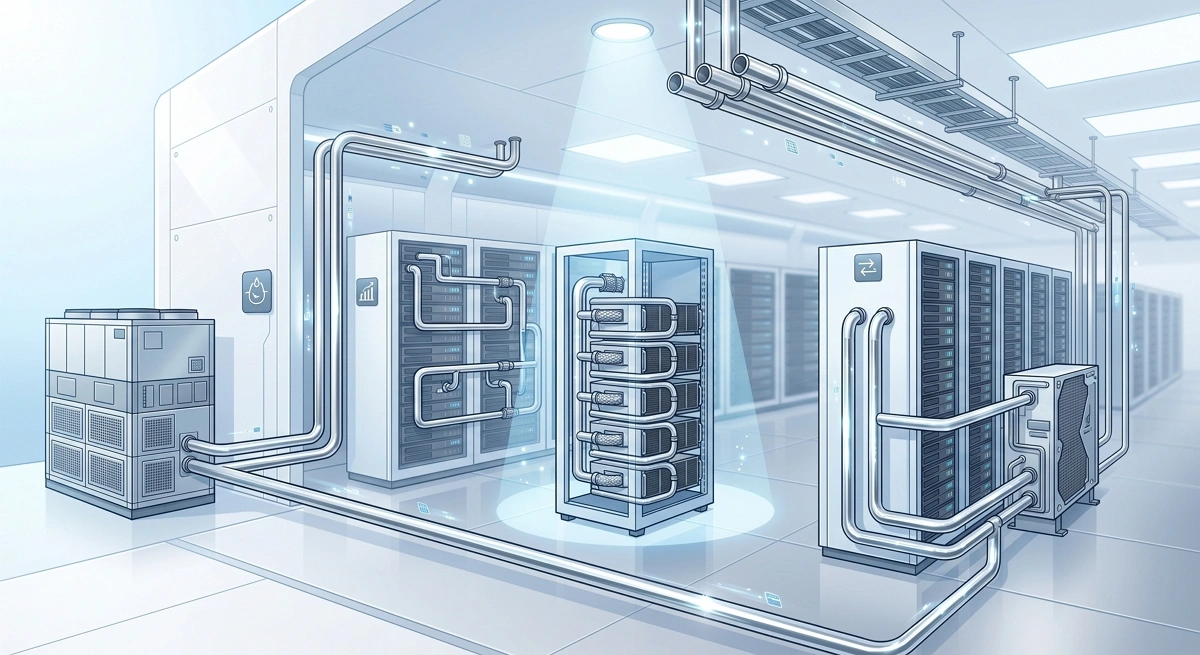
Images created by ChatGPT
1. Why Liquid Cooling Has Reached a Tipping Point
For decades, air cooling technology served the data center industry. Precision air conditioning units, hot/cold aisle containment, and raised floor airflow systems effectively managed the heat loads of traditional server architectures. However, that era is ending rapidly. Three converging forces have propelled liquid cooling from a niche solution for high-performance computing (HPC) clusters into the mainstream architecture of every new hyperscale and colocation facility built in 2025 and 2026.
The AI Chip Thermal Density Crisis
NVIDIA‘s Blackwell platform and its successors have redefined expectations for server thermal loads. Currently, a single GPU module typically has a TDP exceeding 700W, while a fully integrated configuration—including multiple GPUs, CPUs, memory, and networking components—can generate over 100 kW of heat within a single rack. At these high power densities, traditional air cooling methods are inadequate for dissipating heat quickly and effectively.
Energy Efficiency and Sustainability Mandates
Up to 40% of a data center’s total energy consumption is dedicated to cooling. Liquid cooling provides superior thermal conductivity, as water’s thermal conductivity is approximately 25 times greater than that of air. This advantage directly improves Power Usage Effectiveness (PUE), reduces electricity costs, and significantly lowers greenhouse gas emissions in both Scope 1 and Scope 2 categories. As hyperscale data center operators aim to achieve net-zero emissions targets and governments enforce regulatory pressure through EU energy efficiency regulations, liquid cooling technology has become a crucial solution for sustainable development.
2. Why Stainless Steel Is the Material of Choice for Cooling Infrastructure
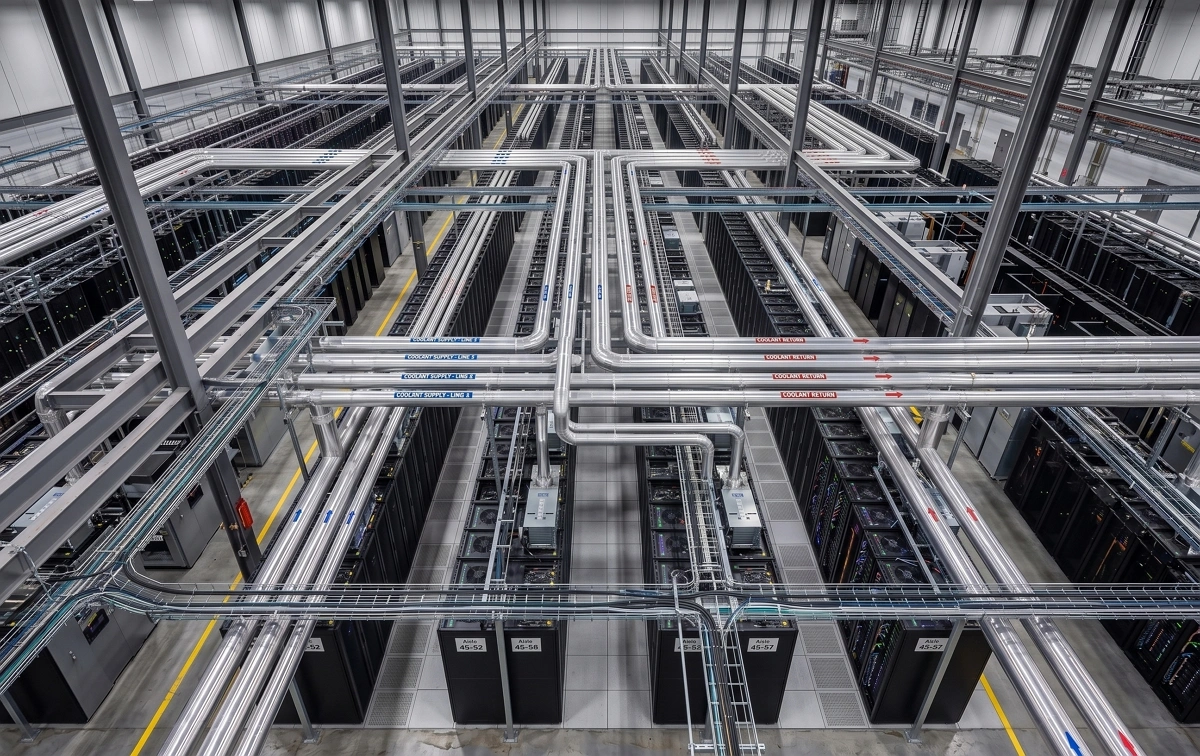
Liquid cooling systems are highly efficient heat dissipation technologies that use liquid as a heat transfer medium, circulating it through closed or open piping to effectively remove heat generated by high-power equipment. The piping supplying this coolant must have a service life of at least 10 years and be free from leaks, corrosion, and particulate contamination to prevent damage to sensitive server components. In such harsh operating environments, stainless steel is the preferred material due to its numerous advantages.
Corrosion Resistance That Outlasts the Data Center Build Cycle
The corrosion resistance of stainless steel originates from a self-regenerating chromium oxide passivation layer that forms on its surface in the presence of oxygen. Studies have demonstrated that stainless steel pipes can maintain corrosion resistance for over 10 years in treated cooling circuits, significantly outperforming aluminum or carbon steel alternatives, which require frequent inspection, maintenance, and replacement.
Surface Quality and Cleanliness for Sensitive Electronics
Stainless steel pipes, when subjected to a bright annealing process, achieve an exceptionally smooth inner surface. This reduces flow resistance, minimizes pressure drop, and prevents particulate contaminants from entering the liquid cooling system. Currently, liquid cooling system integrators require that rack pipes and cold plate water supply pipes undergo electropolishing surface treatment in accordance with ASME BPE SF4 standards—requirements that aluminum or plastic pipes cannot meet.
Images created by ChatGPT
3. Key Applications —304 and 316L for Cooling Applications
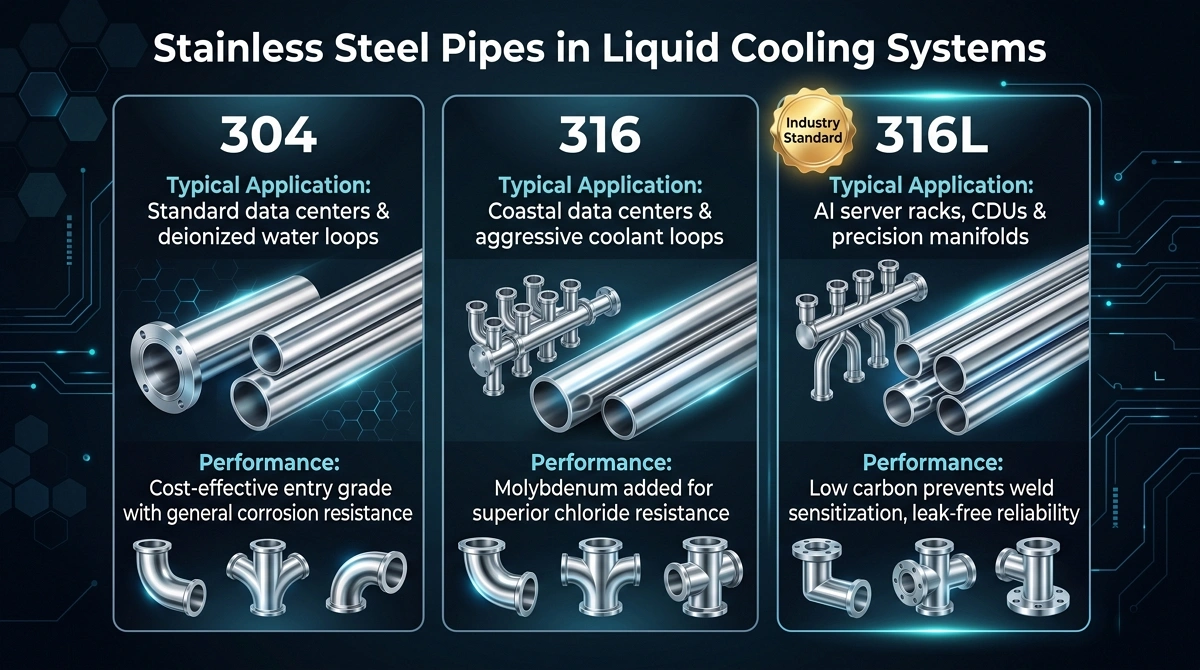
The appropriate grade depends on the coolant chemistry, operating pressure, installation environment, and expected service life. The following table summarizes the primary grades specified in liquid cooling system design:
| Grade | Typical Application | Performance Advantage |
| 304 | Standard data centers, clean cooling loops with deionized water | Cost-effective entry grade; excellent general corrosion resistance; widely available in tube form |
| 316 | Coastal data centers, glycol-based or aggressive coolant loops | Molybdenum addition dramatically improves chloride resistance; preferred for demanding environments |
| 316L | AI server racks, CDUs, in-rack manifolds, immersion cooling | Prevents sensitization at welds; ideal for precision-welded manifolds and piping; industry gold standard for liquid cooling |
4. The Sustainability Case for Stainless Steel in Liquid Cooling
As data center operators commit to achieving sustainability goals—including net-zero emissions (Scope 1 and Scope 2), 100% renewable energy use, and alignment with the United Nations Sustainable Development Goals—the environmental performance of materials used in liquid cooling systems is receiving increasing attention. Stainless steel offers significant sustainability advantages in several key areas.
Longevity Reduces Material Consumption:
That is a very reasonable estimate, though under optimal conditions, a properly selected, installed, and maintained 316L stainless steel cooling circuit can easily last 20 to 25+ years, whereas aluminum or plastic cooling circuits may need to be replaced every 5 to 7 years. A longer lifespan results in less material recycling, lower manufacturing energy consumption, and reduced construction waste throughout the data center’s operational life.
Images created by ChatGPTHigh Recycled Content and 100% Recyclability:
Stainless steel is one of the most recyclable materials worldwide. Electric arc furnace (EAF) processes use 60% to 80% recycled scrap, and the finished product is 100% recyclable at the end of its service life. For data center operators concerned about the embodied carbon emissions of building materials (Scope 3), stainless steel produced via EAF has a significantly lower carbon footprint than conventionally produced stainless steel.
Liquid Cooling Enables Energy Savings at the System Level:
Beyond the material itself, stainless steel’s role in enabling reliable liquid cooling infrastructure delivers compounding energy benefits. Liquid cooling systems reduce data center PUE to 1.03–1.10 versus air-cooled facilities operating at 1.3–1.6 PUE. At hyperscale data centers consuming 100MW+, this efficiency difference represents millions of tons of avoided CO₂ emissions per year. Reliable, leak-free stainless piping is the enabling infrastructure for these sustainability gains.
Compatibility with Water Efficiency Initiatives
NVIDIA’s Blackwell platform reported water efficiency improvements of over 300x through optimized liquid cooling architecture. Closed-loop stainless steel cooling systems can recycle coolant and prevent evaporation losses, thereby supporting zero-emission, water-saving goals. Since data centers located in arid regions may face water shortages, improving water efficiency is becoming increasingly important.
Chloride-Free, Non-Toxic Material
Stainless steel does not react with plasticizers, bisphenols, or other chemicals that leach from coolant, thereby protecting sensitive electronic components and preventing the generation of chemical waste during coolant disposal.
5. Sourcing Stainless Steel Tubes for Liquid Cooling with Yieh Corp.
Yieh Corp. is a leading global distributor and service center specializing in stainless steel. Yieh Corp. supply industrial customers in over 60 countries with stainless steel tubing, pipes, strips, and coils in 304 and 316L grades. Leveraging extensive expertise in precision stainless steel products and a vertically integrated supply chain supported by our sister company, Yieh United Steel Corporation (YUSCO), Yieh Corp. offers liquid cooling system builders reliable access to mill-certified, ASTM/JIS/EN-compliant stainless steel tube products in the grades and dimensions demanded by today’s AI data center infrastructure. Contact our technical team for grade recommendations, custom dimensions, and surface finish specifications tailored to your cooling loop design. Learn more about Pipe and Tube Products